The Jesus Archive
About this study

The New Testament books were written in Greek between c. AD 50 and c. AD 100, on papyrus that has long since perished. Like every ancient text, they reach us through copies of copies, made by hand until the printing press arrived in the fifteenth century.

What sets the New Testament apart is the number and age of those copies. Scraps of papyrus from the second and third centuries, complete Bibles from the fourth, early translations into other languages and thousands of quotations by early Christian writers allow scholars to trace the text back very close to its source.

5,800+Greek New Testament manuscripts catalogued, from small fragments to complete Bibles
140+papyrus manuscripts, most from Egypt and many from the 2nd–4th centuries
c. 10,000manuscripts of the Latin Vulgate translation
c. AD 350the earliest surviving complete New Testament, in Codex Sinaiticus

The great witnesses

10 manuscripts
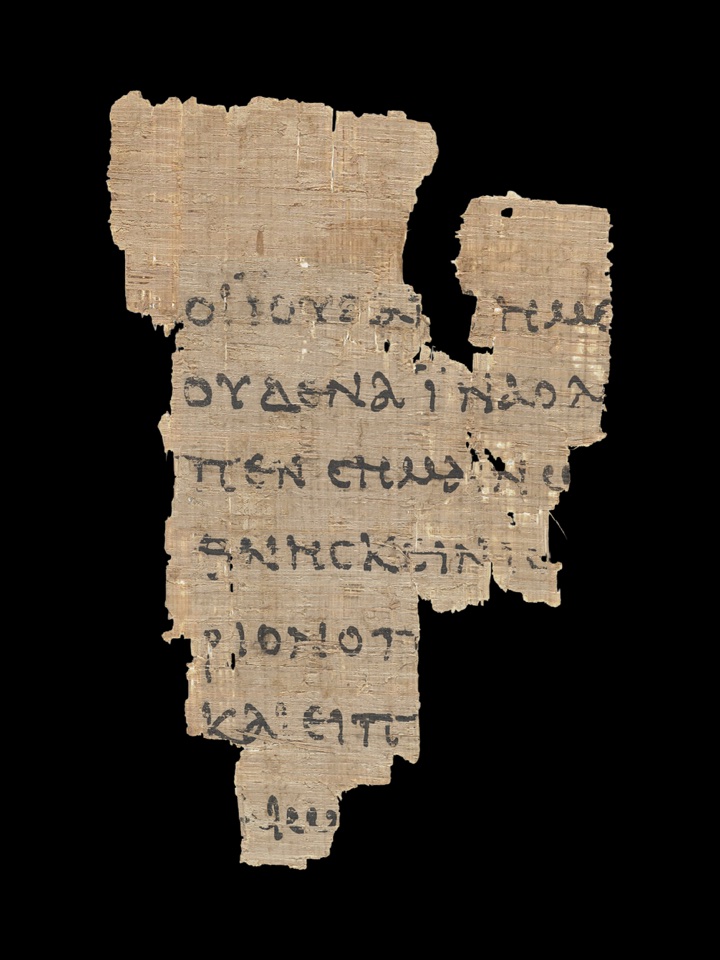
Papyrus 52: John 18:31–33, John Rylands Library, Manchester
2nd century

Papyrus 52 (Rylands)

Contains
John 18:31–33, 37–38
Kept
John Rylands Library, Manchester
Image
Public domain, via Wikimedia Commons

A scrap the size of a credit card from a codex of John, found in Egypt. Proposed dates run from c. AD 100 to c. 200, and on any of them it is among the earliest surviving pieces of the New Testament.

See it in the archive →
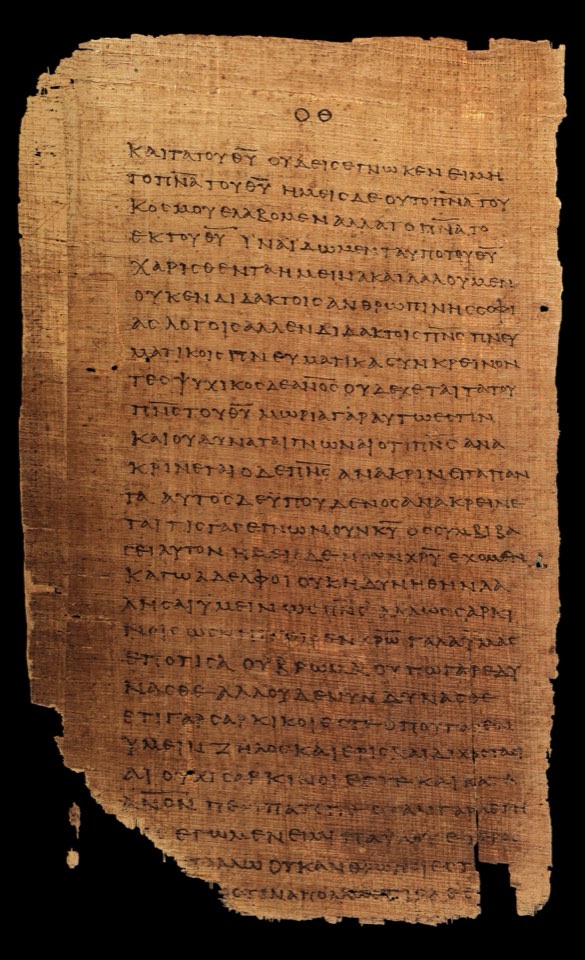
Papyrus 46: 1 Corinthians 2:11–3:5, University of Michigan Library
c. AD 200

Papyrus 46 (Chester Beatty II)

Contains
Most of Paul’s letters and Hebrews
Kept
Chester Beatty Library, Dublin, and University of Michigan, Ann Arbor
Image
Public domain, via Wikimedia Commons

The oldest surviving collection of Paul’s letters, copied as a single book about a century and a half after he wrote them. It already treats Paul’s letters as a set to be read together.

See it in the archive →
Papyrus 45: Mark 8:35–9:1, Chester Beatty Library, Dublin
c. AD 250

Papyrus 45 (Chester Beatty I)

Contains
Portions of all four Gospels and Acts
Kept
Chester Beatty Library, Dublin (one leaf in Vienna)
Image
Public domain, via Wikimedia Commons

The earliest surviving manuscript to bind the four Gospels and Acts in one volume. Though damaged, it shows the fourfold Gospel circulating together in the third century.

See it in the archive →
Papyrus 66 (Bodmer II): the Gospel of John, Bodmer Library, Cologny, Geneva
c. AD 200 (some scholars argue later)

Papyrus 66 (Bodmer II)

Contains
Most of John
Kept
Fondation Martin Bodmer, Cologny, Geneva
Image
Public domain, via Wikimedia Commons

A nearly complete copy of John’s Gospel. Its scribe made hundreds of corrections in the course of the work, showing the text being checked with care as it was copied.

See it in the archive →
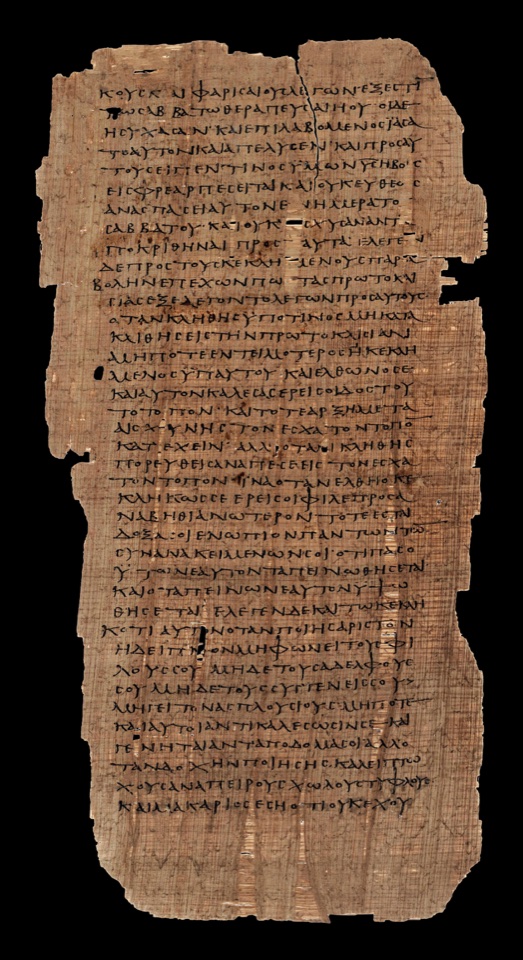
Papyrus 75: Luke 14:3–14, Vatican Apostolic Library
c. AD 175–225 (some scholars argue later)

Papyrus 75 (Bodmer XIV–XV)

Contains
Much of Luke and John
Kept
Vatican Library, Rome
Image
Public domain, via Wikimedia Commons

The earliest copy of Luke. Its text agrees remarkably closely with Codex Vaticanus, copied about a century later, showing a carefully preserved line of transmission.

See it in the archive →
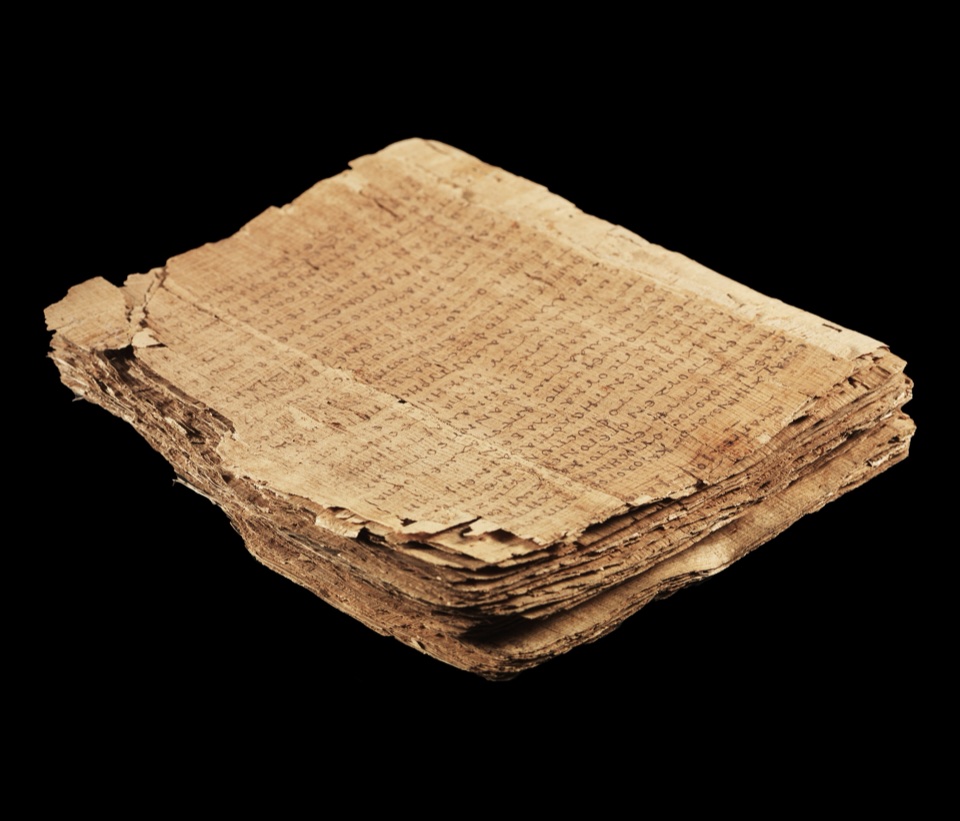
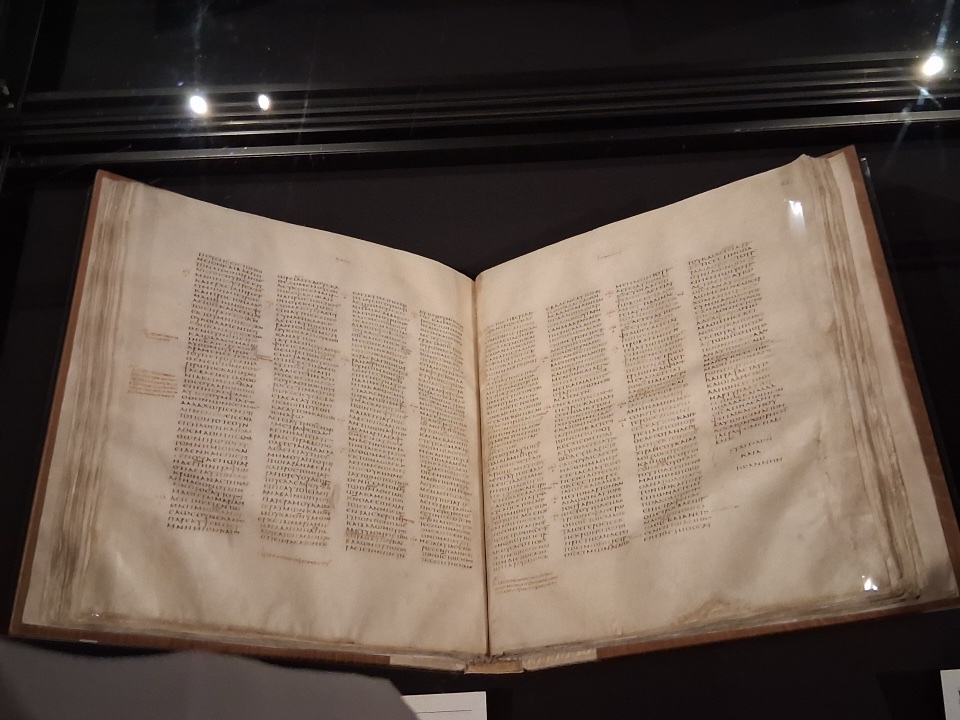
Codex Sinaiticus on display, British Library, London
4th century (c. AD 330–360)

Codex Sinaiticus

Contains
The complete New Testament, much of the Greek Old Testament, the Epistle of Barnabas and part of the Shepherd of Hermas
Kept
British Library, London (with leaves in Leipzig, St Petersburg and St Catherine’s Monastery, Sinai)
Image
Public domain, via Wikimedia Commons

The earliest surviving complete New Testament, found at St Catherine’s Monastery at the foot of Mount Sinai in the nineteenth century. It is now fully digitised and readable online.

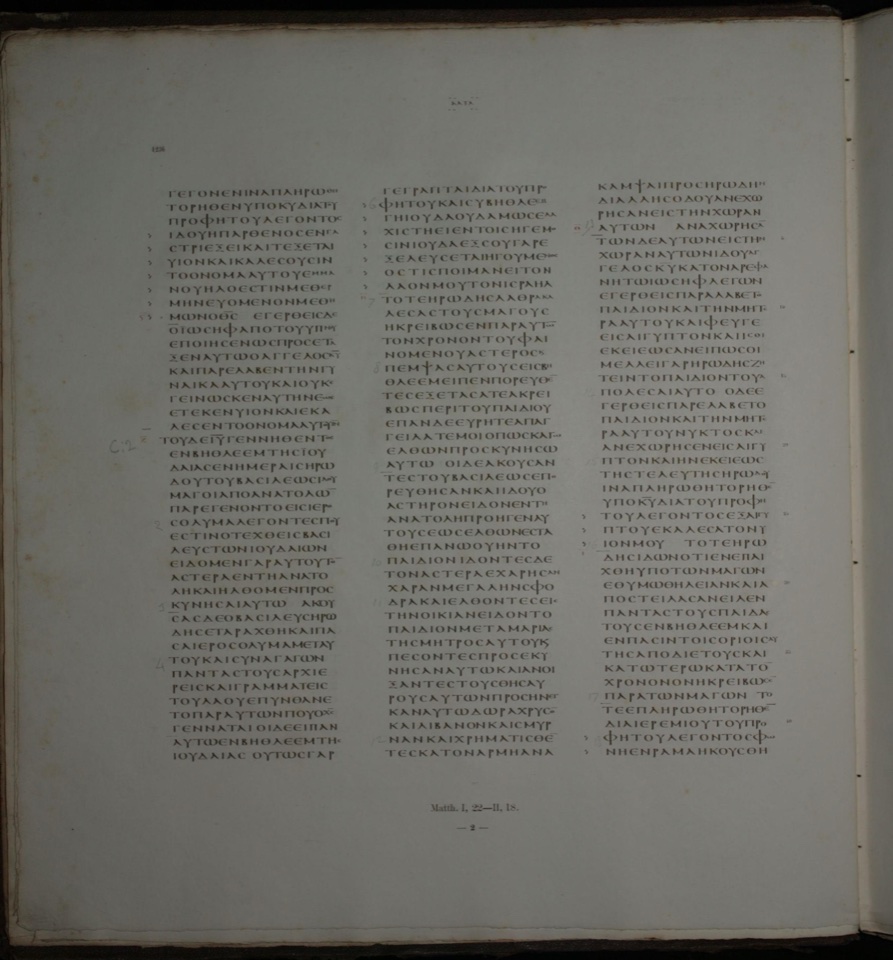
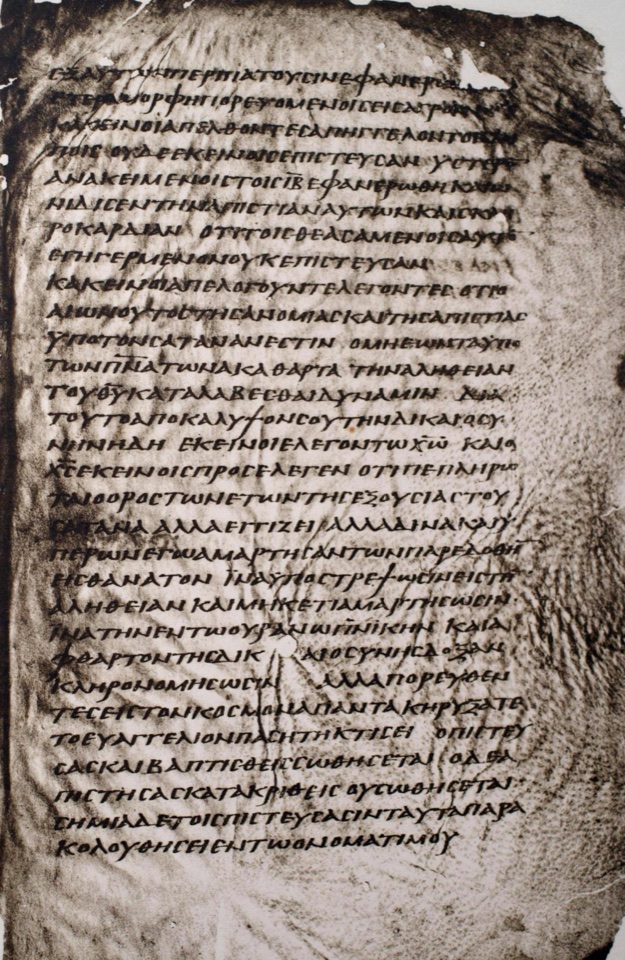
Codex Vaticanus: Matthew 1:22–2:18, Vatican Apostolic Library
4th century (c. AD 300–350)

Codex Vaticanus

Contains
Most of the Greek Bible; the New Testament breaks off at Hebrews 9:14 and lacks the Pastoral Letters, Philemon and Revelation
Kept
Vatican Library, Rome
Image
Public domain, via Wikimedia Commons

Perhaps the most valued single manuscript for the Gospels. With Sinaiticus it is one of the two great fourth-century Bibles on which modern editions rest.

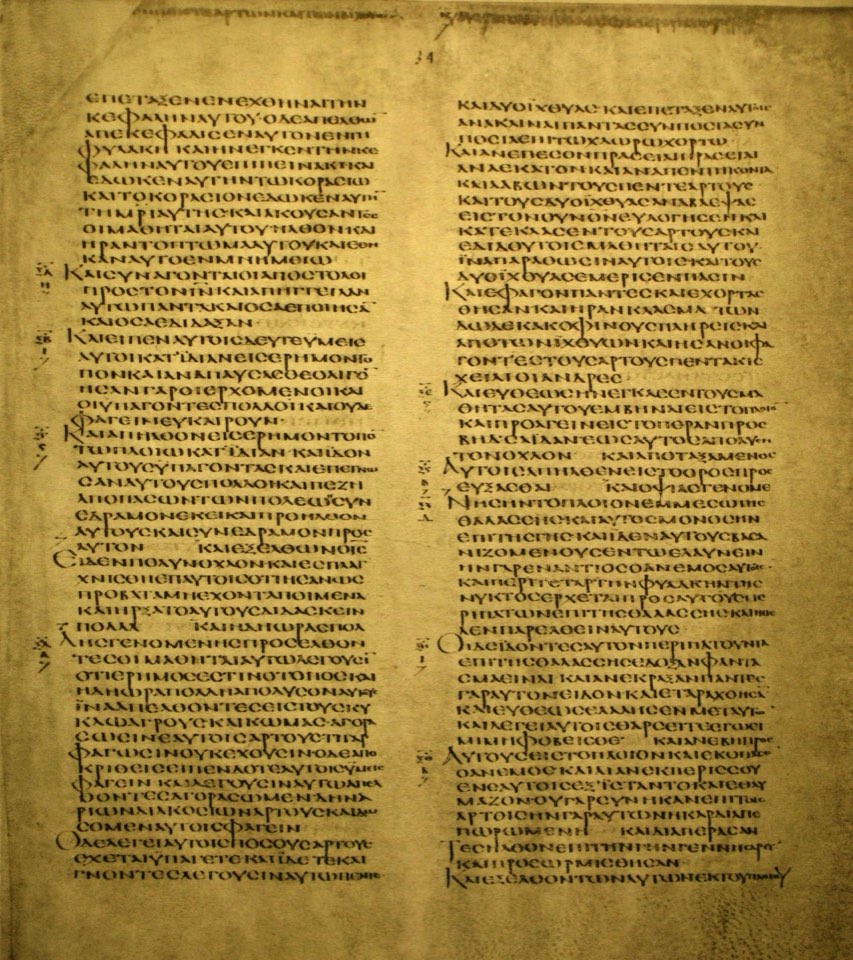
Codex Alexandrinus: Mark 6:27–54, British Library, London
5th century

Codex Alexandrinus

Contains
Nearly the whole Greek Bible, with some losses in the New Testament, followed by 1 and 2 Clement
Kept
British Library, London
Image
Public domain, via Wikimedia Commons

Long kept by the patriarchs of Alexandria and given to King Charles I of England in 1627. It also preserves the letter of Clement of Rome to the Corinthians.

See it in the archive →
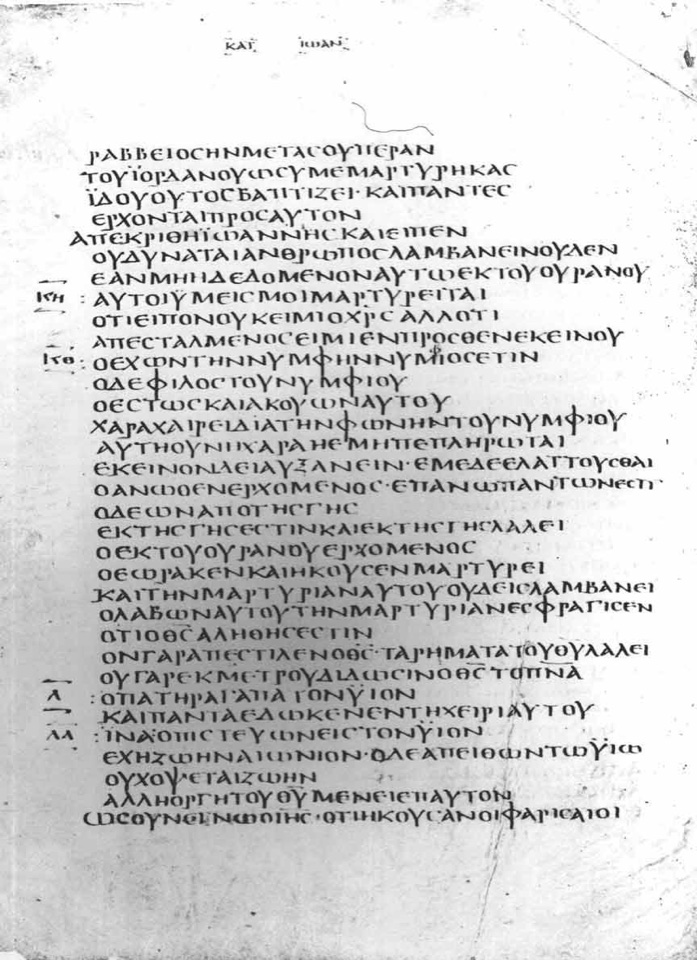
Codex Bezae: John 3:26–4:1, Cambridge University Library
c. AD 400 (late 4th or 5th century)

Codex Bezae

Contains
The Gospels and Acts in Greek and Latin on facing pages, with a fragment of 3 John
Kept
Cambridge University Library
Image
Public domain, via Wikimedia Commons

The chief witness to the so-called Western text, which differs most from other manuscripts in Acts. It shows the kind of freer copying scholars weigh when they compare witnesses.

See it in the archive →
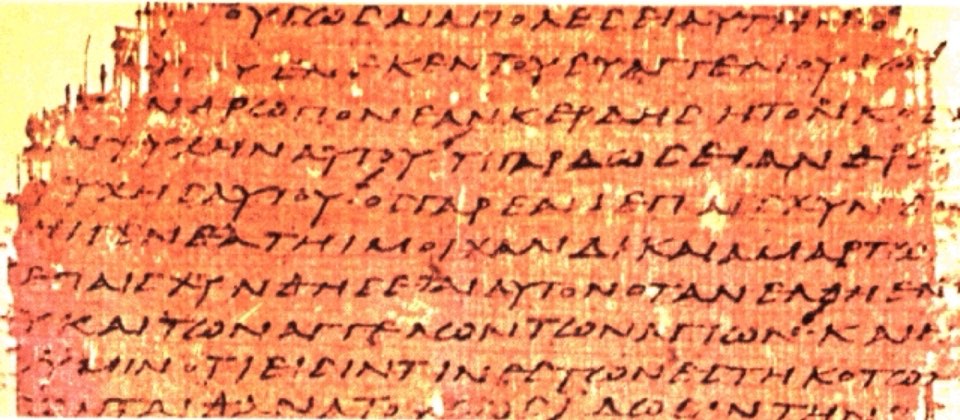
Codex Washingtonianus: Mark 16:12–17, Freer Gallery of Art, Washington, D.C.
late 4th or 5th century

Codex Washingtonianus (W)

Contains
The four Gospels, in the order Matthew, John, Luke, Mark
Kept
Freer Gallery of Art, Smithsonian Institution, Washington, DC
Image
Public domain, via Wikimedia Commons

Bought in Egypt in 1906. Its copy of Mark includes the longer ending with an extra saying after 16:14 found in no other Greek manuscript, a vivid example of how variant endings of Mark circulated.

See it in the archive →

Beside other ancient books

WorkWrittenEarliest copyGapCopies
New TestamentVariousc. AD 50–1002nd century (fragments); c. AD 200–250 (substantial papyri); 4th century (complete)Decades for the earliest fragments; c. 250–300 years for a complete copy5,800+ Greek, many fragmentary; c. 10,000 Latin
AnnalsTacitusc. AD 1169th century (books 1–6); 11th century (books 11–16)c. 750–950 years2 primary manuscripts
Gallic WarJulius Caesarc. 58–50 BC9th centuryc. 900 yearsc. 250
Lives of the CaesarsSuetoniusc. AD 1219th centuryc. 700 yearsc. 200
Jewish AntiquitiesJosephusc. AD 93–949th century (Latin translation); 11th century (Greek, books 11–20)c. 800–1,000 yearsA few Greek manuscripts for each part; more in Latin
IliadHomerc. 8th century BC3rd century BC (papyrus fragments); 10th century AD (complete)c. 400–500 years to the earliest fragmentsWell over 1,000, most of them papyrus fragments
DialoguesPlatoc. 390–347 BC3rd century BC (papyrus fragments); AD 895 (complete codex)c. 1,250 years to the earliest complete codexc. 250 medieval manuscripts, plus papyrus fragments

What the numbers show

No other ancient book comes close to the New Testament in the number of its manuscripts or their nearness to the time of writing. For most classical authors, scholars rely on a handful of medieval copies; for the New Testament they have thousands, some from the second and third centuries. Many are fragments or lectionaries (books of readings for worship), but the earliest papyri alone give a fuller and older record than survives for Tacitus or Caesar.

Lives compared

Alexander the Great died in 323 BC; the earliest surviving account of his campaigns, by Diodorus of Sicily, came nearly three centuries later, and the fullest, by Plutarch and Arrian, more than four. The Buddha’s teaching was passed on by memory for centuries before the Pali Canon was written down around the first century BC. For Jesus, Paul’s letters date within about twenty-five years of the crucifixion, the Gospels within forty to seventy, and Josephus, Tacitus, Pliny and Suetonius mention him or his followers within a century. No historian doubts that Alexander lived; the reader can weigh what an earlier and fuller record means for Jesus.

How textual criticism works

Textual criticism recovers the original wording of a text from its surviving copies. Scholars compare the manuscripts reading by reading, group them into families, give weight to the oldest and most careful, and ask which reading best explains the others. Because the New Testament witnesses are so many and so widespread, a mistake made in one place is usually exposed by copies from elsewhere. Modern critical editions print the result and list the main alternatives at the foot of each page.

What the variants are like

Hand copying produces differences, and across thousands of manuscripts they add up. Most are minor: spelling, word order, a dropped or repeated word, a synonym. A smaller number change the sense of a sentence. The few significant ones, such as the longer ending of Mark (16:9–20) and the woman caught in adultery (John 7:53–8:11), are well known and marked in modern Bibles with a note or brackets, in plain view for any reader to check.

Early translations

As the faith spread, the New Testament was translated: into Latin in the second and third centuries, before Jerome’s Vulgate (c. AD 382–405), and into Syriac and Coptic for the churches of Syria, Mesopotamia and Egypt from the third century. The translators worked from Greek manuscripts older than most that survive, so their versions show what the Greek read in their region and time.

The Fathers’ quotations

Early Christian writers quoted the New Testament constantly. Irenaeus (c. AD 180), Tertullian, Clement of Alexandria and Origen cite it so often that much of the text could be rebuilt from their works alone. Their quotations show which readings were known where and when, and confirm that the books were being read and copied across the Mediterranean well before the great fourth-century Bibles.
The other studies